Kale & Collards
Kale and collards are delicious cooking greens rich in vitamins and minerals.
Plant care & info
Kale and collards do best in full sun (at least six hours of direct sun) and thrive in rich, well drained soil with a pH between 6.0‐7.0. Spread 1‐3” of composted manure over the bed and work it into the soil before planting. Also add a granular, all purpose fertilizer and lime to each planting hole.
Kale and collards are just as easy to start directly from seed as they are from transplants in the garden. You can start seeds indoors under lights 6‐8 weeks before the last frost. In Portland, the seeding window is mid February through March. Harden off seedlings to outdoor temperatures by setting them in a cold frame for a week before planting. If you do not have a cold frame, set seedlings outdoors during the day and indoors at night for a week before planting.
Transplants can go into the garden as early as two weeks before the last frost date. Plant seedlings 12‐24” apart in rows 18‐36” apart, and water in with liquid seaweed or B1. Cover your new planting with floating row cover to prevent attacks from cabbage loopers, aphids, and other chewing insects that love brassicas.
Kale can be directly sown in your garden in late April through May. Collards can be directly seeded in the garden from late April through mid July. Be sure to amend the planting area with 1‐3” of composted manure before sowing seeds. Plant seeds 1⁄4 “ deep in rows 18‐36” apart. Seedlings should be thinned 12‐24” apart when they have at least three true leaves.
Seeds for a fall harvest should be started in flats or the garden from July through early August. Seedlings can go in the ground once they have 2‐3 sets of true leaves. Kale is very sensitive to heat and should be planted in the shade of larger summer crops such as cucumbers or potatoes. Transplants can go in the ground through the end of September.
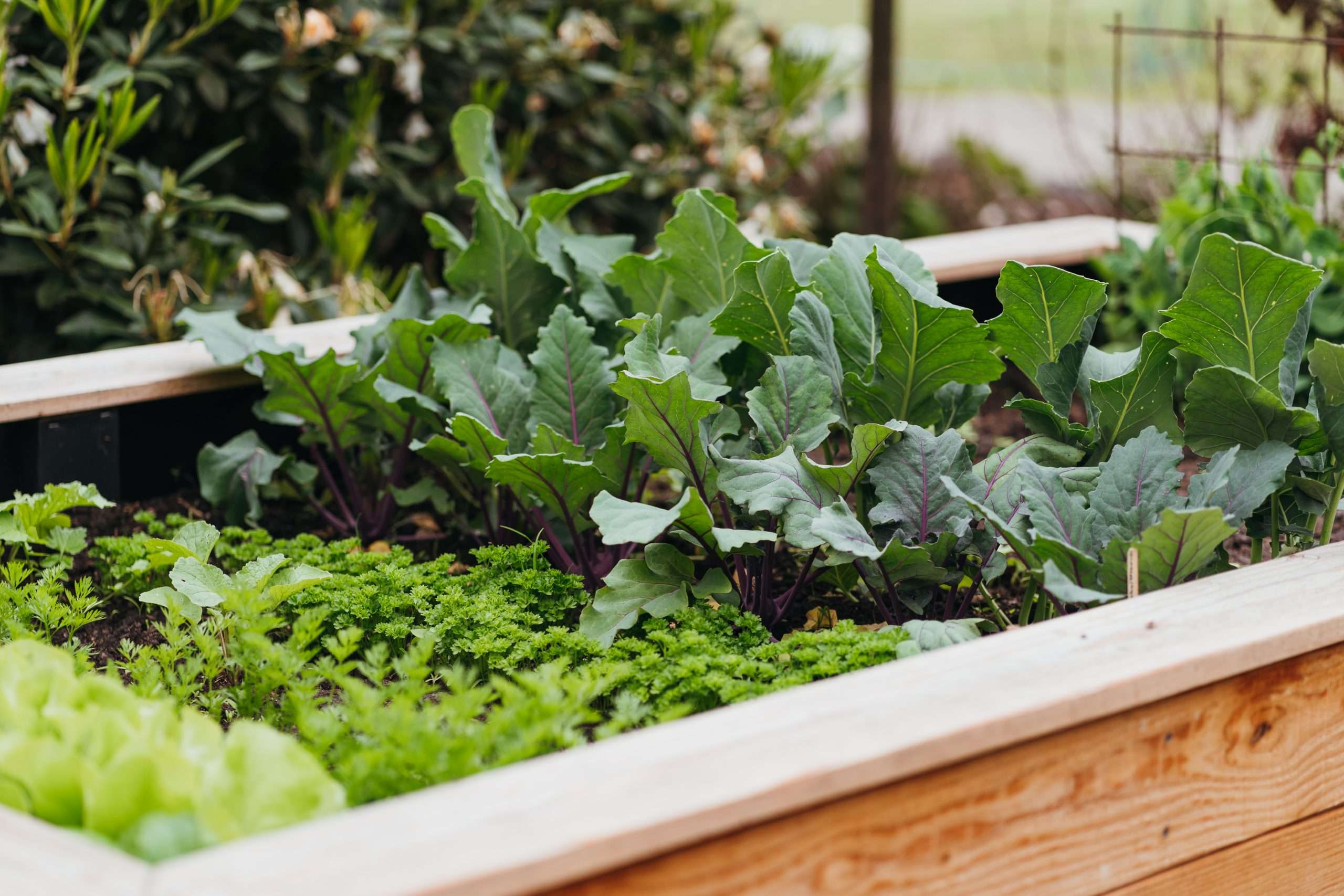
Kale and collards can also be grown in containers. Choose a pot at least 8” wide and deep. The soil mix should be 1/3 planting compost and 2/3 potting soil. The array of colors and texture of kale make them quite attractive in mixed containers.
How much water your plants will require depends on the soil and weather. Kale and collards need average, evenly moist soil. Mulch with a 1⁄2” layer of compost to retain moisture and prevent over heating. Drip irrigation is the best way to provide even moisture and while having fewer disease issues.
Like all Brassicas, kale and collards are heavy feeders. They’ll benefit from a side dressing of composted manure or all purpose granular fertilizer two weeks after transplanting.
Kale and collard leaves can be harvested at any size. For continual harvest, start picking leaves at the bottom of the plant, leaving the central growing potion to produce more. Lower yellow leaves are past their prime. Kale and collards become sweeter after the first frost.
Kale and collards store best in the garden and can be harvested as needed. Harvested leaves can keep for a week when refrigerated.
Common issues are often due to weather and cultural conditions. Plants will bolt (go to flower) quickly in reaction to hot weather and drought. Correct planting time, moderate and consistent moisture, soil amending, and row covers are all strategies to improve growing conditions.
- Cutworms can often mow down all of your seedlings in one night. Spinosad is an organic control for cutworms. Nematodes can also help control cutworms.
- Cabbage loopers and imported cabbage worms leave large irregular holes in leaves, coupled with bits of green excrement. For prevention, cover new seed beds with floating row cover. Spray with Bt to control infestation.
- Aphid damage often appears as curled, twisted, and/or yellowed leaves. You may find colonies of green to yellow aphids on the undersides of the leaves and growing tips. Sticky sap on leaves and stems, along white aphid skeletons, can be quite prevalent. There are numerous sprays and control measures to help combat aphids.
- Flea beetles chew dozens of tiny holes in the leaves. For prevention, cover new seed beds with floating row cover until plants are 8” tall. Dust with diatomaceous earth or spray with pyrethrin.
- Mildews appear as white patches, preceded by reddish patches, on the leaves and stems. Both downy and powdery mildew are fungal issues. Downy mildew can also cause roots to be misshapen with rough, cracked skin. Remove as much of the infected areas as possible. There are numerous fungicides listed for edibles, such as Serenade, that can prevent the spread of powdery mildew.
- Snails and slugs leave large holes in leaves or eat new transplants when they feed at night. They often leave iridescent trails on leaves and the ground. Slug baits and beer traps are just two ways to control them.
- Plants can collapse with overnight temperatures in the teens. Cover plants with frost blanket for protection from extreme temperatures.
Kale is very cold tolerant and yields best fall through spring. Collards are more heat tolerant and are great for summer harvesting in addition to fall through spring. Both greens are incredibly beautiful in the garden or in containers. Both are members of the Brassica family.